⸻ Serra Labs Platform ⸻

Smart cloud spend for every workload

Smart cloud spend for every workload

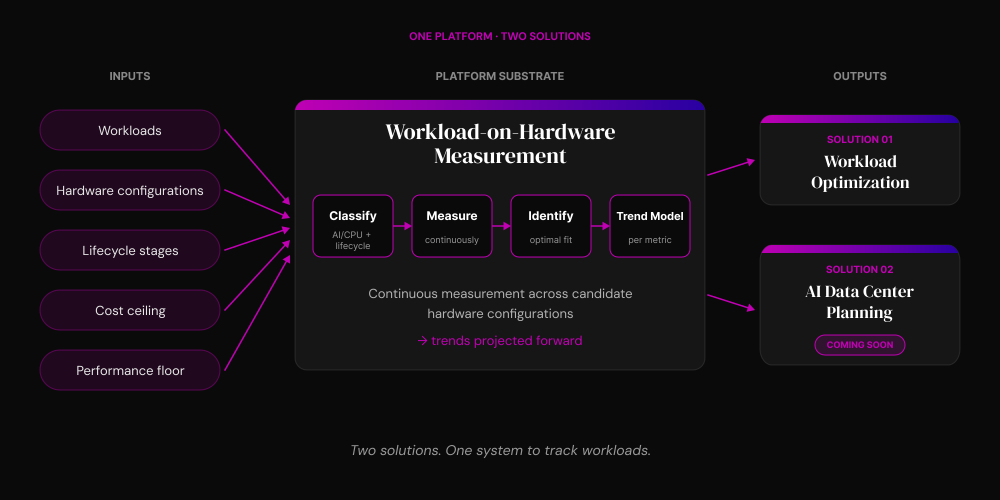
The right optimization strategy depends on what the workload is and where it is in its lifecycle. Serra Labs is the platform that gets both right — automatically.

The right optimization strategy depends on two things: what the workload is, and where it is in its lifecycle. Traditional and AI workloads have fundamentally different economics — and lifecycle stage changes the right mode for AI workloads at every transition. Serra Labs is the platform that handles both, automatically, across every workload in your environment.

The right optimization strategy depends on two things: what the workload is, and where it is in its lifecycle. Traditional and AI workloads have fundamentally different economics — and lifecycle stage changes the right mode for AI workloads at every transition. Serra Labs is the platform that handles both, automatically, across every workload in your environment.

The right optimization strategy depends on two things: what the workload is, and where it is in its lifecycle. Traditional and AI workloads have fundamentally different economics — and lifecycle stage changes the right mode for AI workloads at every transition. Serra Labs is the platform that handles both, automatically, across every workload in your environment.

How It Works

From workload data to optimal configuration

Six steps from raw telemetry to a validated recommendation — with workload type and lifecycle stage as first-class inputs at every stage.

Step 01

📡 Collect

Workload utilization, resource health, and performance metrics — including CPU steal cycles, disk I/O wait, memory pressure, and GPU core saturation. Health alongside utilization, not utilization alone.

Step 02

🔍 Classify

Workload type — AI/GPU or traditional/CPU — and lifecycle stage: prototyping, testing and validation, or production. Both dimensions determine the right optimization strategy.

Step 03

🎯 Select Mode

The right optimization mode for this workload at this stage: Maximize Savings, Maximize Value, or Maximize Speed. Not one mode for everything — the right mode for each.

Step 04

⚡️ Search

A patent-pending approach efficiently searches potentially millions of configurations — GPU cores, VRAM, CPU, memory, network, and storage — to find the optimal fit for the objective.

Step 05

✅ Validate

Expected cost and performance outcomes — with a guaranteed performance floor. Cost optimization means the lowest cost configuration that still delivers defined performance, not cost-cutting.

Step 06

🔄 Apply & Observe

Deploy the recommendation and continuously monitor cost-performance efficiency. As workloads mature through their lifecycle, the platform adjusts the optimization mode accordingly.

How It Works

From workload data to optimal configuration

Six steps from raw telemetry to a validated recommendation — with workload type and lifecycle stage as first-class inputs at every stage.

Step 01

📡 Collect

Workload utilization, resource health, and performance metrics — including CPU steal cycles, disk I/O wait, memory pressure, and GPU core saturation. Health alongside utilization, not utilization alone.

Step 02

🔍 Classify

Workload type — AI/GPU or traditional/CPU — and lifecycle stage: prototyping, testing and validation, or production. Both dimensions determine the right optimization strategy.

Step 03

🎯 Select Mode

The right optimization mode for this workload at this stage: Maximize Savings, Maximize Value, or Maximize Speed. Not one mode for everything — the right mode for each.

Step 04

⚡️ Search

A patent-pending approach efficiently searches potentially millions of configurations — GPU cores, VRAM, CPU, memory, network, and storage — to find the optimal fit for the objective.

Step 05

✅ Validate

Expected cost and performance outcomes — with a guaranteed performance floor. Cost optimization means the lowest cost configuration that still delivers defined performance, not cost-cutting.

Step 06

🔄 Apply & Observe

Deploy the recommendation and continuously monitor cost-performance efficiency. As workloads mature through their lifecycle, the platform adjusts the optimization mode accordingly.

How It Works

From workload data to optimal configuration

Six steps from raw telemetry to a validated recommendation — with workload type and lifecycle stage as first-class inputs at every stage.

Step 01

📡 Collect

Workload utilization, resource health, and performance metrics — including CPU steal cycles, disk I/O wait, memory pressure, and GPU core saturation. Health alongside utilization, not utilization alone.

Step 02

🔍 Classify

Workload type — AI/GPU or traditional/CPU — and lifecycle stage: prototyping, testing and validation, or production. Both dimensions determine the right optimization strategy.

Step 03

🎯 Select Mode

The right optimization mode for this workload at this stage: Maximize Savings, Maximize Value, or Maximize Speed. Not one mode for everything — the right mode for each.

Step 04

⚡️ Search

A patent-pending approach efficiently searches potentially millions of configurations — GPU cores, VRAM, CPU, memory, network, and storage — to find the optimal fit for the objective.

Step 05

✅ Validate

Expected cost and performance outcomes — with a guaranteed performance floor. Cost optimization means the lowest cost configuration that still delivers defined performance, not cost-cutting.

Step 06

🔄 Apply & Observe

Deploy the recommendation and continuously monitor cost-performance efficiency. As workloads mature through their lifecycle, the platform adjusts the optimization mode accordingly.

One Platform. Three Optimization Strategies.

Match strategies with workload needs.

Cut costs where speed doesn't matter.

Unlock speed where it does.

Find the right balance in between.

Strategy 01

💰 Maximize Savings

Lowest cost, acceptable performance. Right-size to eliminate spend that isn't earning its keep

Best For Non-Critical Workloads

Dev / Test

Batch Jobs

Backup & Archive

Background Tasks

Lifecycle note: The right default for most traditional workloads through the lifecycle and for AI workloads in the prototyping phase.

Strategy 02

⚖️ Maximize Value

Best cost-to-production ratio. Invest where performance drives outcomes, stay lean where it doesn't.

Best For Production Workloads

Web Applications

E-Commerce

Production APIs

Lifecycle note: Right for production traditional workloads where performance matters, and for AI workloads in the testing and validation phase.

Strategy 03

⚡️ Maximize Speed

Highest performance, fastest results. When throughput and iteration velocity directly drive business outcomes.

Best For Mission-Critical Workloads

AI Training & Inference

Real-Time Analytics

Latency-Sensitive Services

Lifecycle note: Where AI workloads in production earn their highest return. Also right for traditional workloads in production when performance drives direct business outcomes.

One Platform. Three Optimization Strategies.

Match strategies with workload needs.

Cut costs where speed doesn't matter.

Unlock speed where it does.

Find the right balance in between.

Strategy 01

💰 Maximize Savings

Lowest cost, acceptable performance. Right-size to eliminate spend that isn't earning its keep

Best For Non-Critical Workloads

Dev / Test

Batch Jobs

Backup & Archive

Background Tasks

Lifecycle note: The right default for most traditional workloads through the lifecycle and for AI workloads in the prototyping phase.

Strategy 02

⚖️ Maximize Value

Best cost-to-production ratio. Invest where performance drives outcomes, stay lean where it doesn't.

Best For Production Workloads

Web Applications

E-Commerce

Production APIs

Lifecycle note: Right for production traditional workloads where performance matters, and for AI workloads in the testing and validation phase.

Strategy 03

⚡️ Maximize Speed

Highest performance, fastest results. When throughput and iteration velocity directly drive business outcomes.

Best For Mission-Critical Workloads

AI Training & Inference

Real-Time Analytics

Latency-Sensitive Services

Lifecycle note: Where AI workloads in production earn their highest return. Also right for traditional workloads in production when performance drives direct business outcomes.

One Platform. Three Optimization Strategies.

Match strategies with workload needs.

Cut costs where speed doesn't matter.

Unlock speed where it does.

Find the right balance in between.

Strategy 01

💰 Maximize Savings

Lowest cost, acceptable performance. Right-size to eliminate spend that isn't earning its keep

Best For Non-Critical Workloads

Dev / Test

Batch Jobs

Backup & Archive

Background Tasks

Lifecycle note: The right default for most traditional workloads through the lifecycle and for AI workloads in the prototyping phase.

Strategy 02

⚖️ Maximize Value

Best cost-to-production ratio. Invest where performance drives outcomes, stay lean where it doesn't.

Best For Production Workloads

Web Applications

E-Commerce

Production APIs

Lifecycle note: Right for production traditional workloads where performance matters, and for AI workloads in the testing and validation phase.

Strategy 03

⚡️ Maximize Speed

Highest performance, fastest results. When throughput and iteration velocity directly drive business outcomes.

Best For Mission-Critical Workloads

AI Training & Inference

Real-Time Analytics

Latency-Sensitive Services

Lifecycle note: Where AI workloads in production earn their highest return. Also right for traditional workloads in production when performance drives direct business outcomes.

Key Capabilities

Everything needed to make cloud spend smart

🖥️ Workload-Aware Optimization

Different strategies for AI and traditional workloads, matching the right mode to each workload's type and lifecycle stage. Not one strategy applied uniformly — the right one for each situation.

⚡️ GPU-Aware Configuration

For AI workloads: evaluates GPU cores, VRAM, and memory bandwidth together — not just core count or hourly rate. A cheaper GPU that stalls on VRAM constraints or memory bandwidth is not a cheaper GPU per result.

📐 Performance-Guaranteed Right-Sizing

For traditional workloads: finds the lowest cost configuration that still delivers a defined performance floor. Cost optimization, not cost-cutting — the performance constraint is hard, not a preference.

🩺 Resource Health Analysis

Evaluates health signals alongside utilization — CPU steal cycles, disk I/O wait, memory pressure, network retransmits. Prevents false economies where a lower bill means degraded performance that doesn't show up on an invoice.

🔄 Lifecycle Mode Management

Applies cost optimization in prototyping, value optimization in validation, and performance optimization in production — for AI workloads where lifecycle is a first-class input. Consistent cost discipline with performance awareness throughout for traditional workloads.

🧹 Optimal Parking & Cleanup

Identifies resources with periodic use patterns for auto-shutdown when idle and auto-start when needed. Automatically eliminates wasteful resources on a continuous basis — spend that isn't earning its keep, removed.

Key Capabilities

Everything needed to make cloud spend smart

🖥️ Workload-Aware Optimization

Different strategies for AI and traditional workloads, matching the right mode to each workload's type and lifecycle stage. Not one strategy applied uniformly — the right one for each situation.

⚡️ GPU-Aware Configuration

For AI workloads: evaluates GPU cores, VRAM, and memory bandwidth together — not just core count or hourly rate. A cheaper GPU that stalls on VRAM constraints or memory bandwidth is not a cheaper GPU per result.

📐 Performance-Guaranteed Right-Sizing

For traditional workloads: finds the lowest cost configuration that still delivers a defined performance floor. Cost optimization, not cost-cutting — the performance constraint is hard, not a preference.

🩺 Resource Health Analysis

Evaluates health signals alongside utilization — CPU steal cycles, disk I/O wait, memory pressure, network retransmits. Prevents false economies where a lower bill means degraded performance that doesn't show up on an invoice.

🔄 Lifecycle Mode Management

Applies cost optimization in prototyping, value optimization in validation, and performance optimization in production — for AI workloads where lifecycle is a first-class input. Consistent cost discipline with performance awareness throughout for traditional workloads.

🧹 Optimal Parking & Cleanup

Identifies resources with periodic use patterns for auto-shutdown when idle and auto-start when needed. Automatically eliminates wasteful resources on a continuous basis — spend that isn't earning its keep, removed.

Key Capabilities

Everything needed to make cloud spend smart

🖥️ Workload-Aware Optimization

Different strategies for AI and traditional workloads, matching the right mode to each workload's type and lifecycle stage. Not one strategy applied uniformly — the right one for each situation.

⚡️ GPU-Aware Configuration

For AI workloads: evaluates GPU cores, VRAM, and memory bandwidth together — not just core count or hourly rate. A cheaper GPU that stalls on VRAM constraints or memory bandwidth is not a cheaper GPU per result.

📐 Performance-Guaranteed Right-Sizing

For traditional workloads: finds the lowest cost configuration that still delivers a defined performance floor. Cost optimization, not cost-cutting — the performance constraint is hard, not a preference.

🩺 Resource Health Analysis

Evaluates health signals alongside utilization — CPU steal cycles, disk I/O wait, memory pressure, network retransmits. Prevents false economies where a lower bill means degraded performance that doesn't show up on an invoice.

🔄 Lifecycle Mode Management

Applies cost optimization in prototyping, value optimization in validation, and performance optimization in production — for AI workloads where lifecycle is a first-class input. Consistent cost discipline with performance awareness throughout for traditional workloads.

🧹 Optimal Parking & Cleanup

Identifies resources with periodic use patterns for auto-shutdown when idle and auto-start when needed. Automatically eliminates wasteful resources on a continuous basis — spend that isn't earning its keep, removed.

How Serra Labs Finds the Optimal Fit

Serra Labs finds what's actually best.

A patent-pending approach efficiently searches potentially millions of possible configurations — GPU cores, VRAM, CPU, memory, network, and storage — to find the optimal fit for the workload type and where it is in its lifecycle.

How Serra Labs Finds the Optimal Fit

Serra Labs finds what's actually best.

A patent-pending approach efficiently searches potentially millions of possible configurations — GPU cores, VRAM, CPU, memory, network, and storage — to find the optimal fit for the workload type and where it is in its lifecycle.

How Serra Labs Finds the Optimal Fit

Serra Labs finds what's actually best.

A patent-pending approach efficiently searches potentially millions of possible configurations — GPU cores, VRAM, CPU, memory, network, and storage — to find the optimal fit for the workload type and where it is in its lifecycle.

Integrations

Works with your infrastructure

aws cloud cost optimization services​

Amazon Web Services

Microsoft Azure

Microsoft Azure

Microsoft Azure

NVIDIA

Integrations

Works with your infrastructure

aws cloud cost optimization services​

Amazon Web Services

Microsoft Azure

Microsoft Azure

Microsoft Azure

NVIDIA

Integrations

Works with your infrastructure

aws cloud cost optimization services​

Amazon Web Services

Microsoft Azure

Microsoft Azure

Microsoft Azure

NVIDIA

Start optimizing every workload for what it actually needs.

Try the Serra Labs Platform free - no commitment required.

Start optimizing every workload for what it actually needs.

Try the Serra Labs Platform free - no commitment required.

Start optimizing every workload for what it actually needs.

Try the Serra Labs Platform free - no commitment required.

© Serra Labs Inc. 2019-2026